Table of contents:
- Pulmonary function testing
- Measurement chain in medical measurement technology
- Blood pressure measurement
- Ultrasound and Doppler sonography
- Experiment: Biosignal Amplifier and Electrocardiography
- Sub-experiment: Electrocardiography
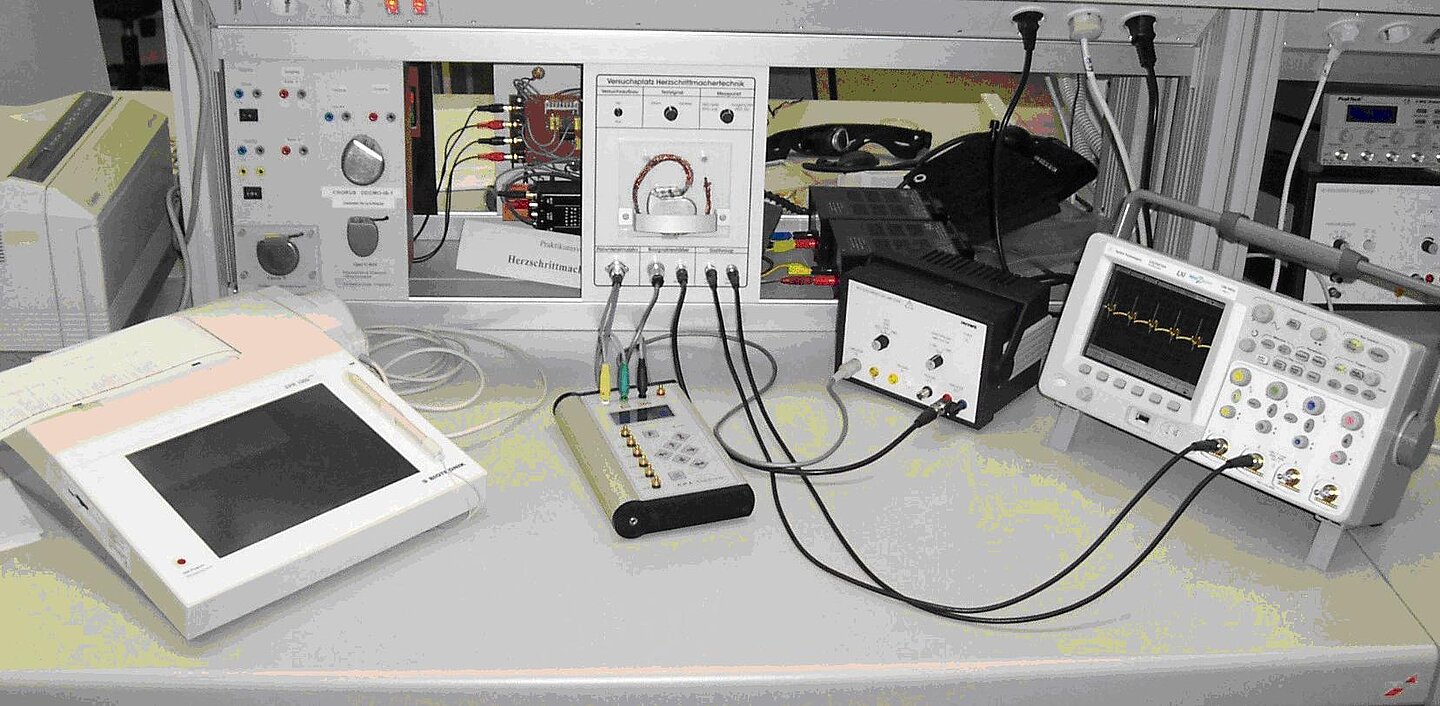
- Pacemaker technology
- Biopotential electrodes and bioimpedance measurement
- Test bench for electromedical devices
Information for the practical placement: Laboratory regulations (PDF, not accessible)
Practical experiments, 4th semester
Pulmonary function testing
Aims of the experiment
- To gain an understanding of how the human respiratory system works
- To familiarise students with the equipment and methods used in pulmonary function testing
- Presentation and analysis of physical parameters relating to respiration and gas exchange
- To familiarise students with methods of artificial ventilation in humans using a ventilator and a lung simulator
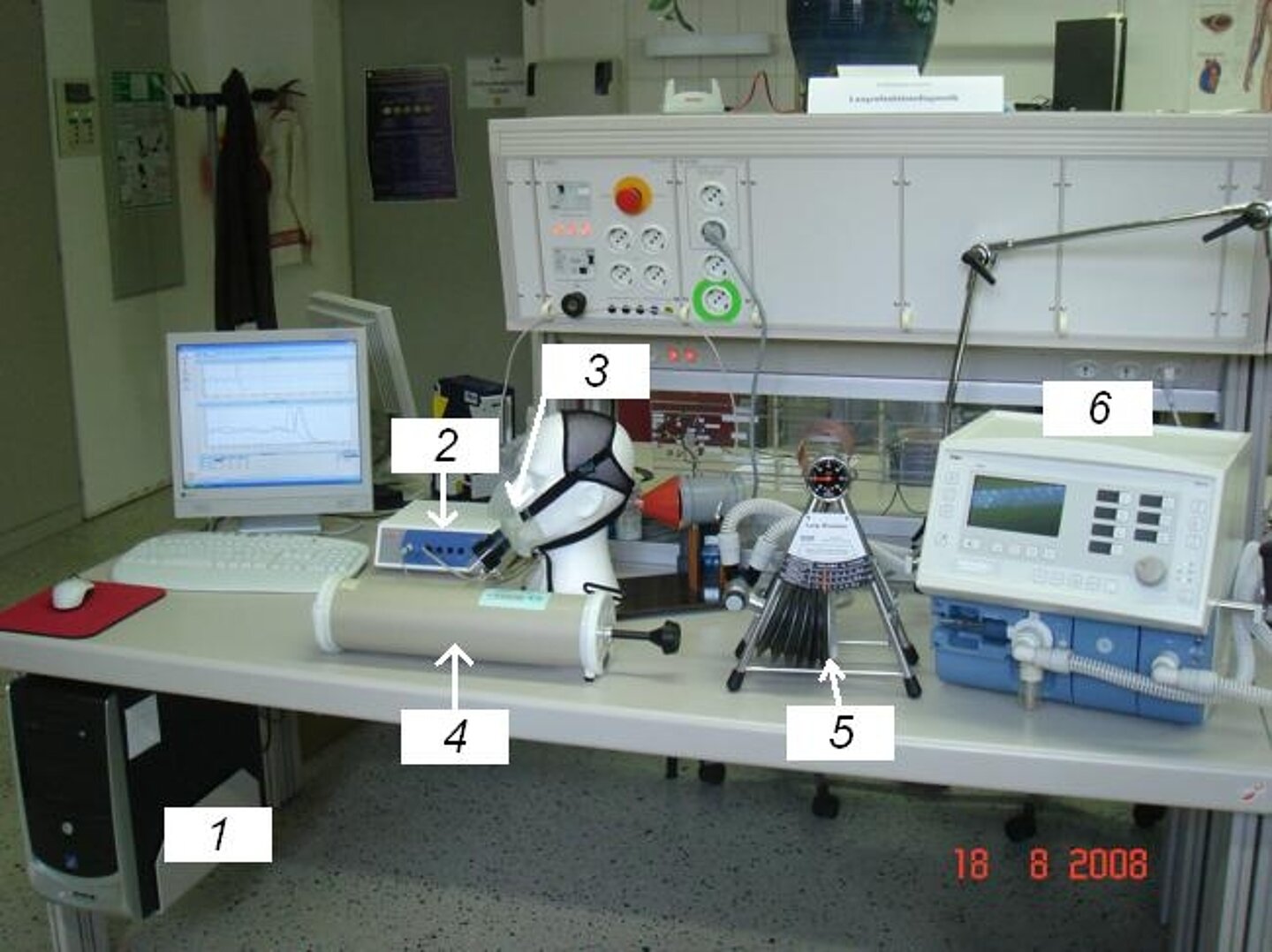
- Photo captions: 1 PC, 2 Matalyzer (Cortex, Leipzig), 3 breathing mask, 4 calibration pump, 5 lung simulator, 6 ventilator (Dräger)
Measuring chain in medical measurement technology
Experimental objectives
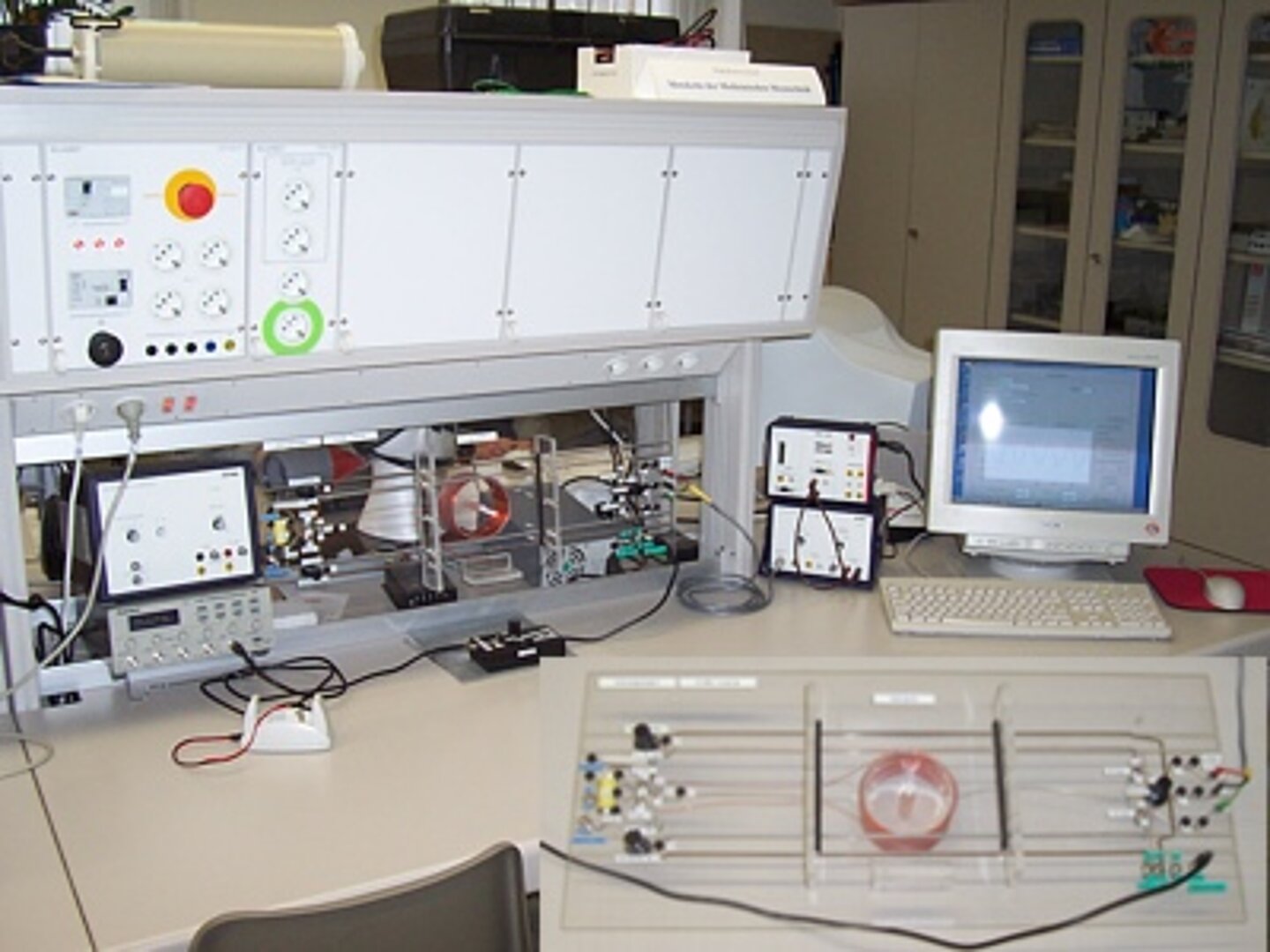
- To familiarise oneself with the structure of the measurement chain in medical measurement technology
- To determine the characteristics of a biosignal amplifier for ECG, EEG and MEG signals (frequency response, step response, common-mode rejection)
- To familiarise oneself with the types of interference coupling and the methods available for reducing interference
- To deepen understanding of unbalanced and balanced signal sources
Blood pressure measurement
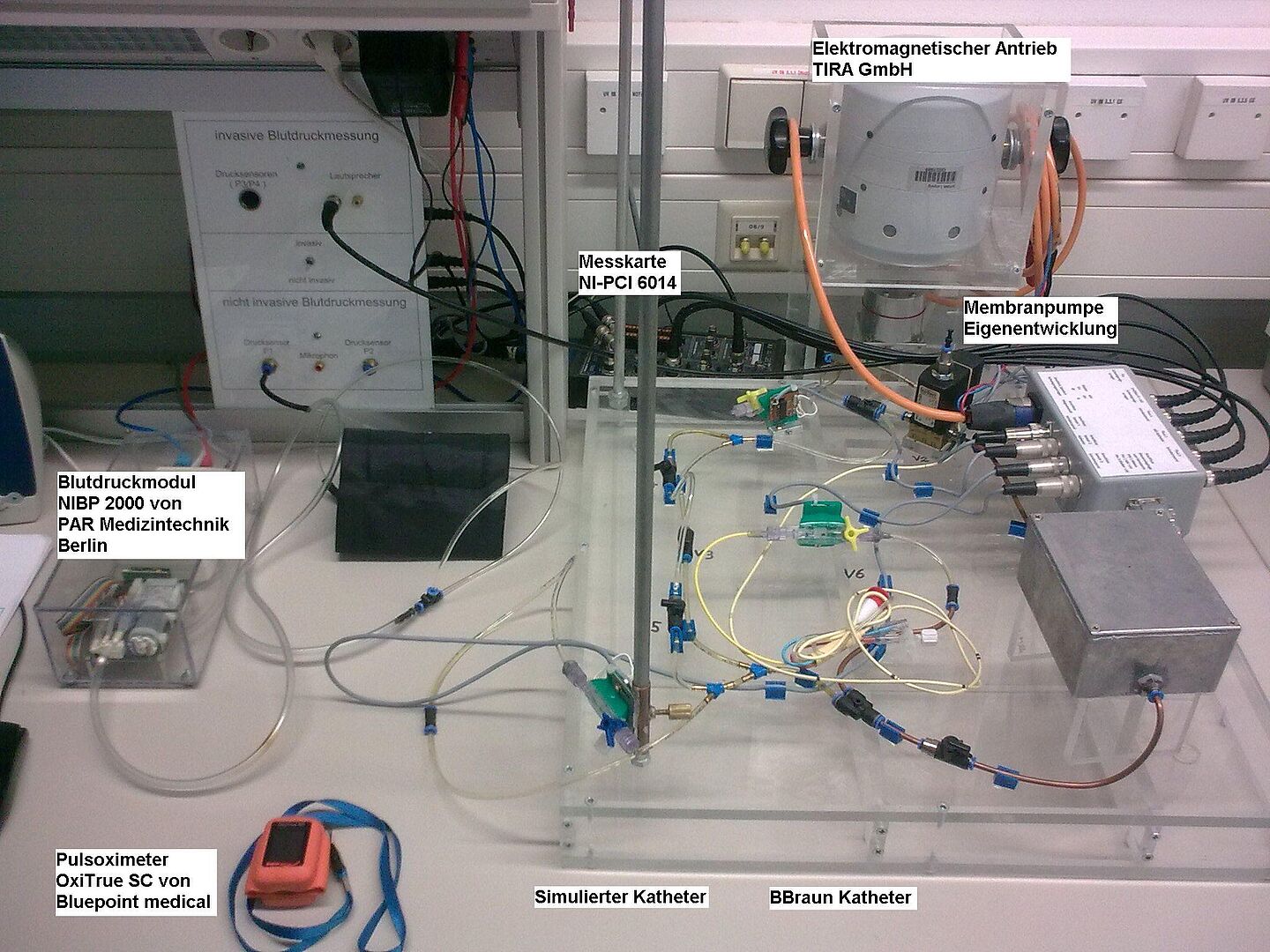
Aims of the study
- To demonstrate the methods used for invasive and non-invasive blood pressure measurement
- To describe the technical aspects of the individual measurement systems and to determine the resistance and compliance, resonance frequency, quality factor and damping of a hydraulic system
- To familiarise students with methods of specific signal processing for pressure signals
- Comparison and evaluation of the various methods of blood pressure measurement
Ultrasound and Doppler sonography
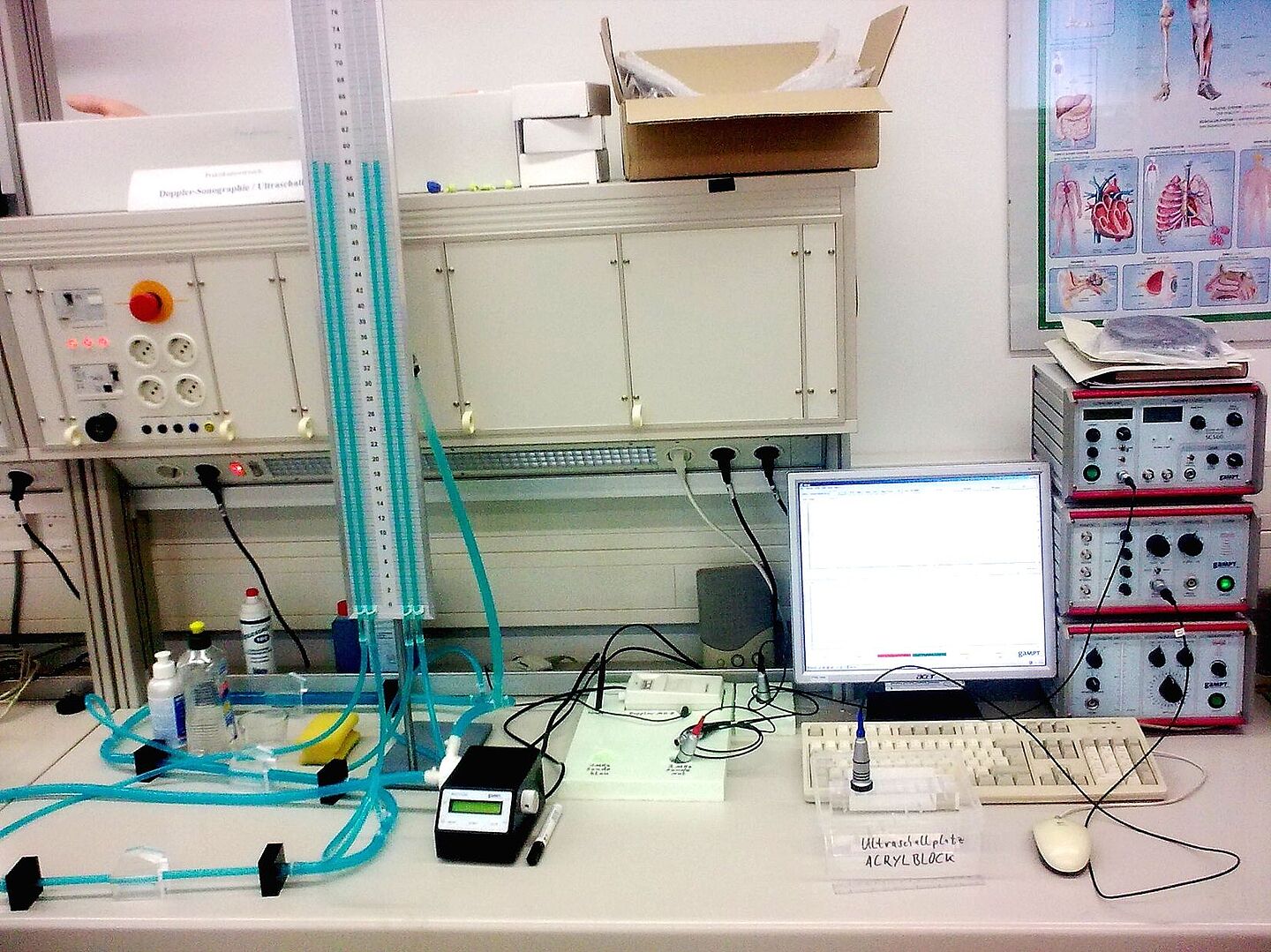
Experimental objectives
- Application of ultrasonic measurement technology using 1 MHz and 2 MHz probes based on the echo and Doppler measurement principles for material testing and flow measurement
- Explanation of the basic principles of colour Doppler
- Familiarisation with the key instrument parameters and their influence on image quality
- Familiarisation with the main artefacts and ways to minimise them
Practical experiments, 5th semester
Experiment on biosignal amplifiers and electrocardiography
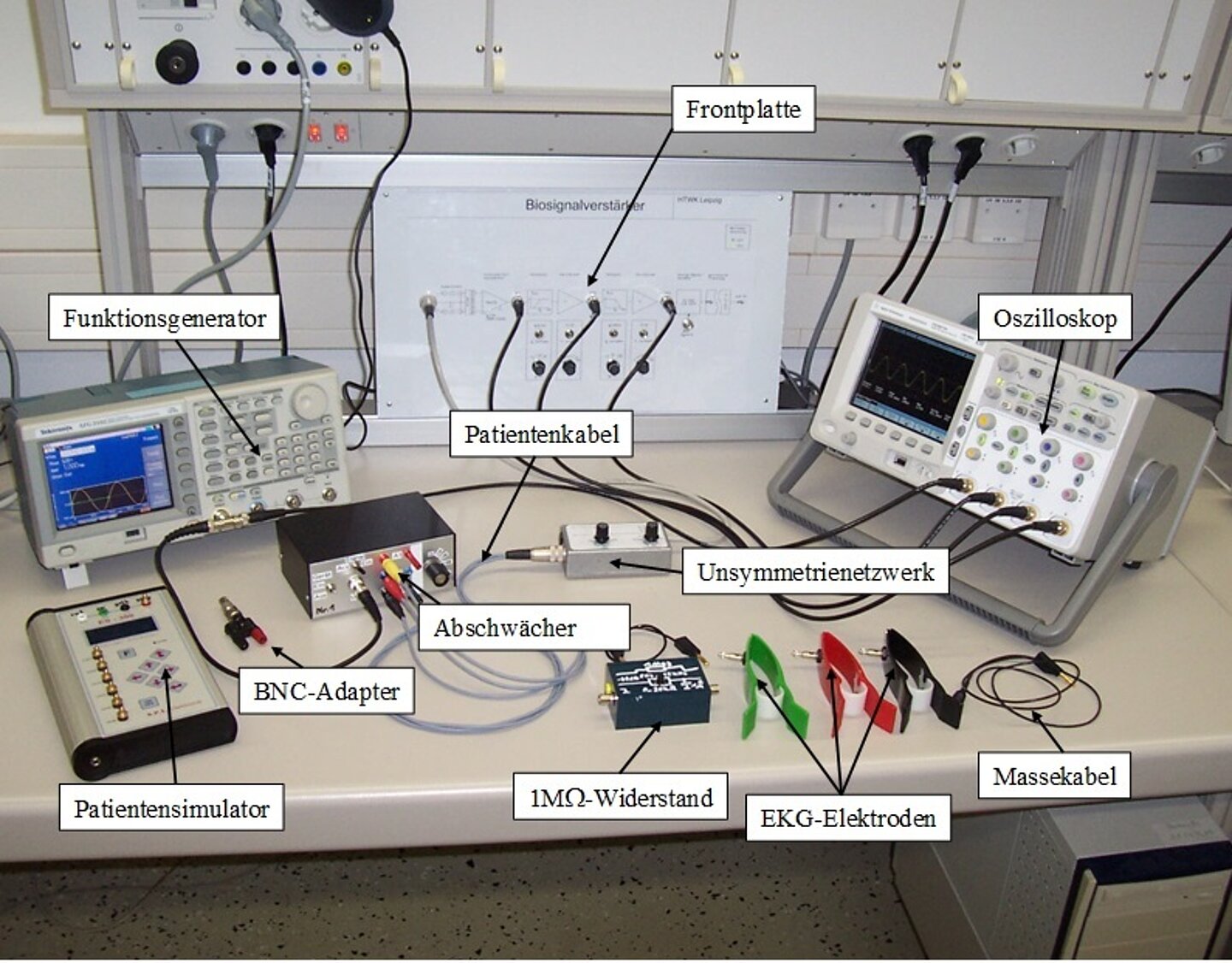
An opportunity for interdisciplinary training for medical students or biologists!
Aims of the experiment
- To gain an understanding of the structure, parameters and specific requirements of a biosignal amplifier
- Demonstration of the effects of using incorrect filter parameters and design or application errors
Sub-experiment: Electrocardiography
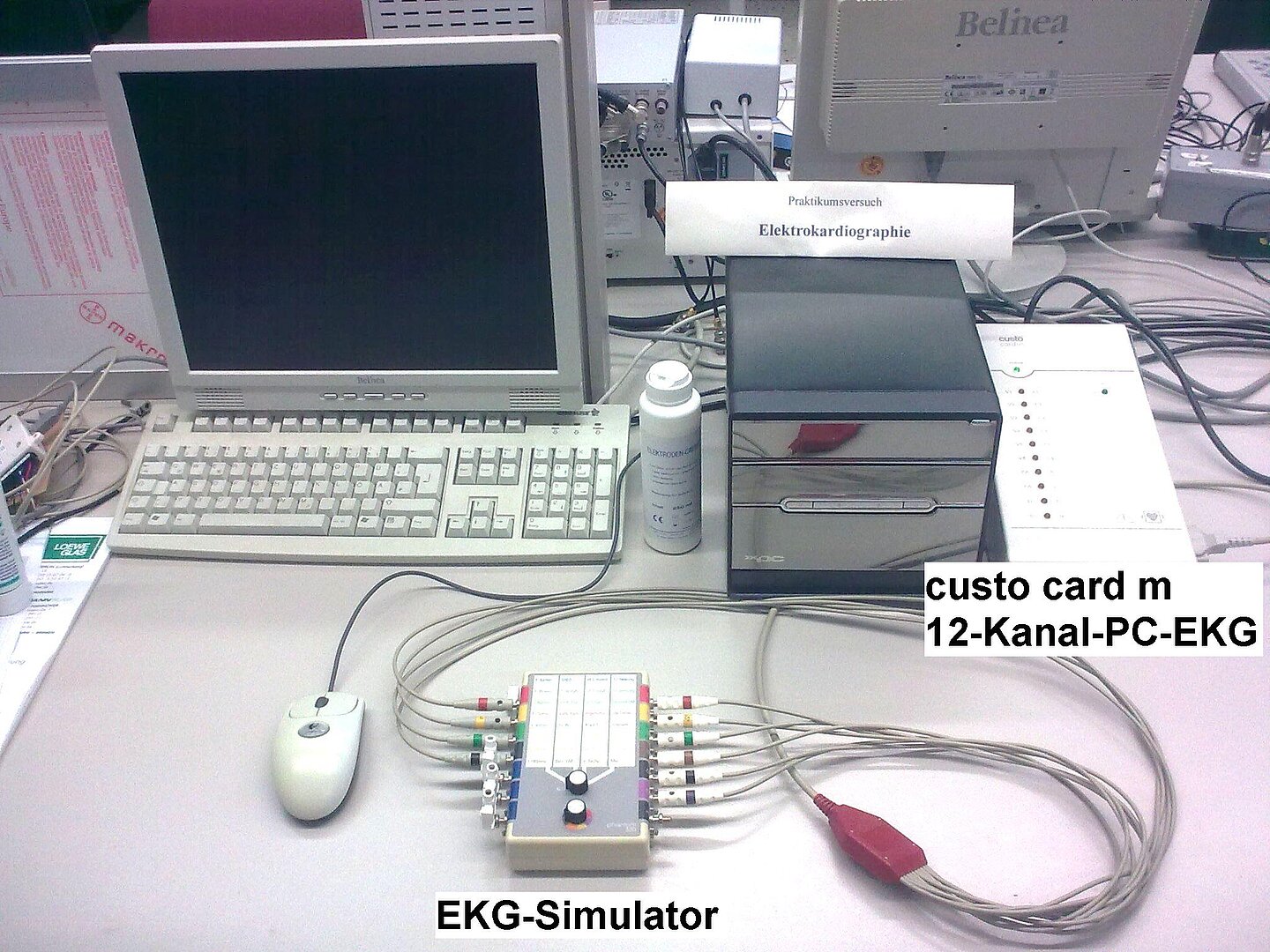
Aims of the experiment
- To familiarise oneself with recording techniques and standard interpretations in electrocardiography
- Investigation of biological and technical artefacts in ECG recordings
- Application of standard methods of digital biosignal processing
- To familiarise students with characteristic pathological electrocardiograms and the possibilities of automatic, computer-assisted interpretation
Biopotential electrodes and bioimpedance measurement
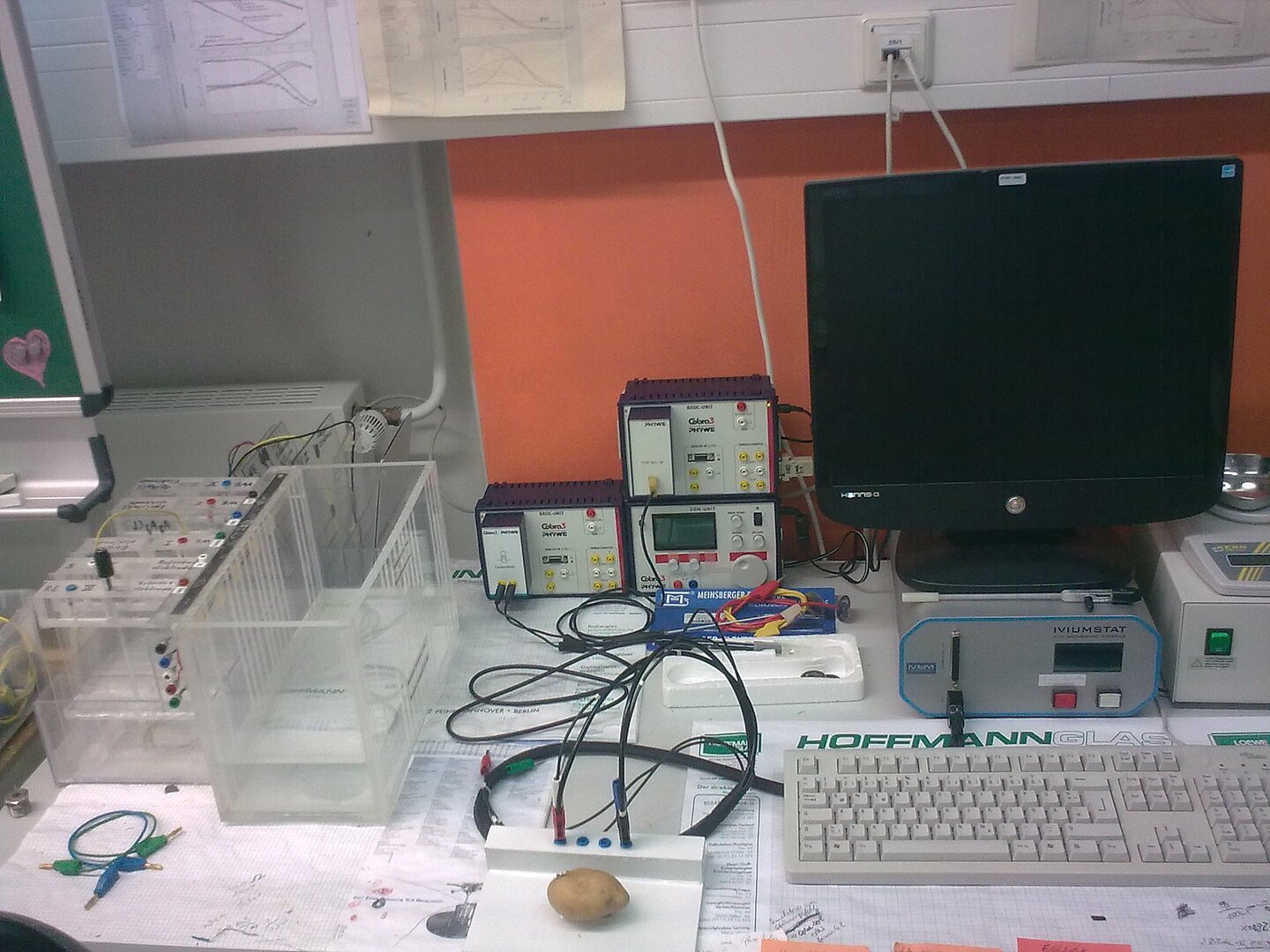
An opportunity for interdisciplinary training for doctors and/or biologists!
Aims of the experiment
- To determine and compare the properties of various electrodes used in electrodiagnostics and electrotherapy
- Equilibrium potential
- U-I characteristic curve and step response
- Determination of the conductivity of electrolytes
- Polarisability and noise of electrodes
- Impedance spectrum of various electrodes